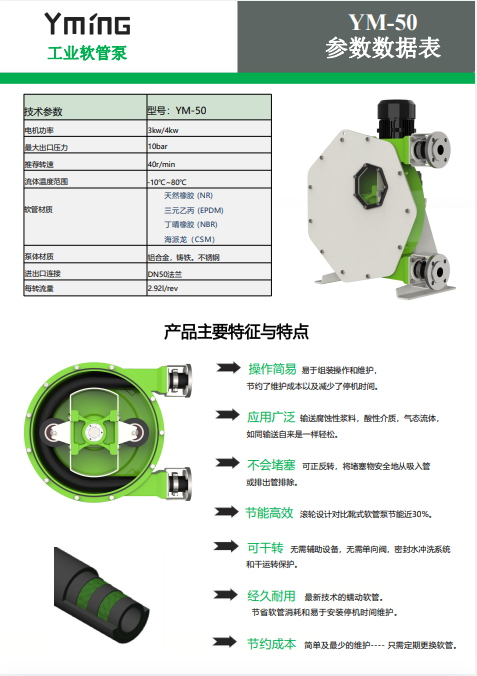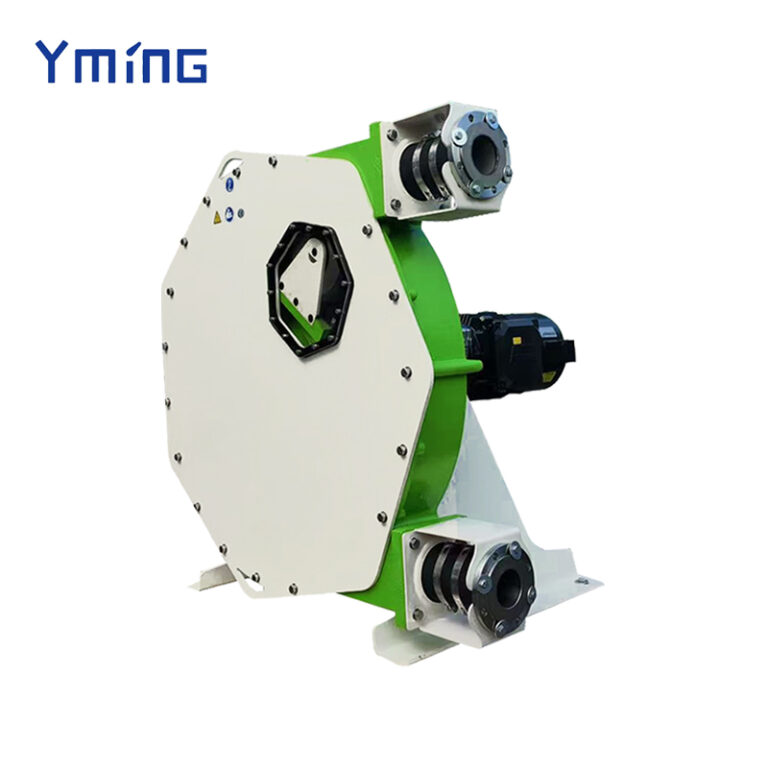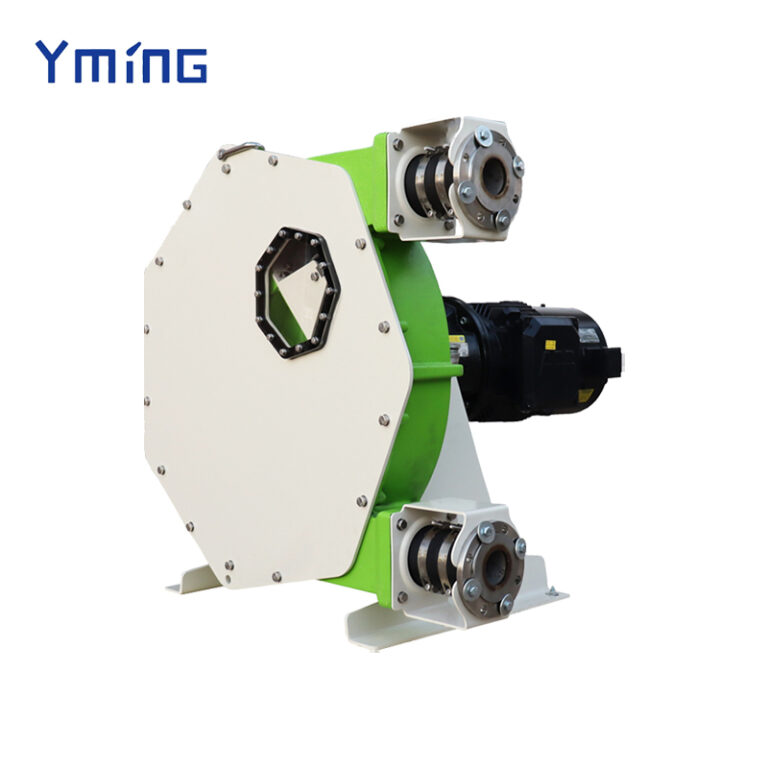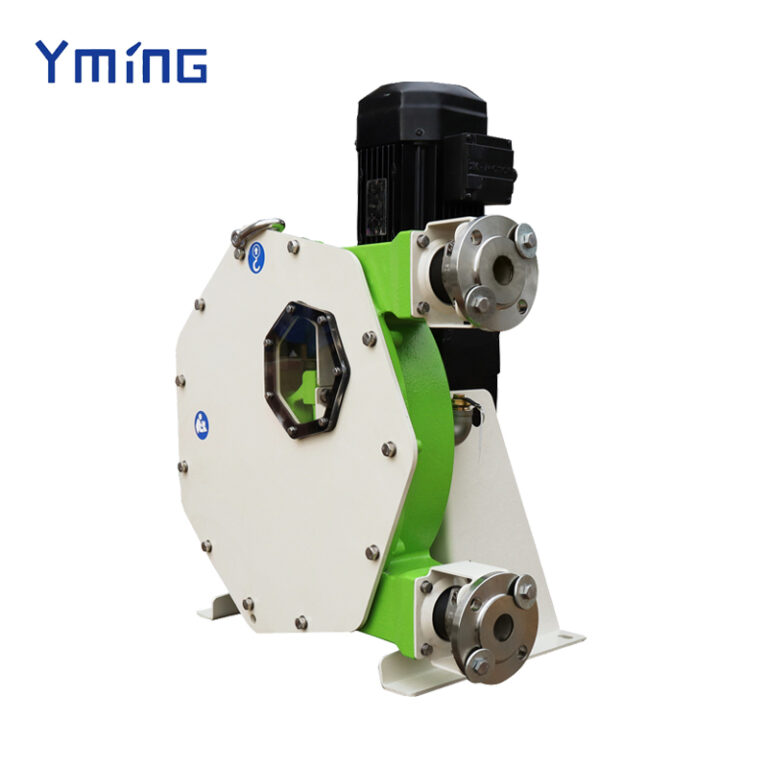
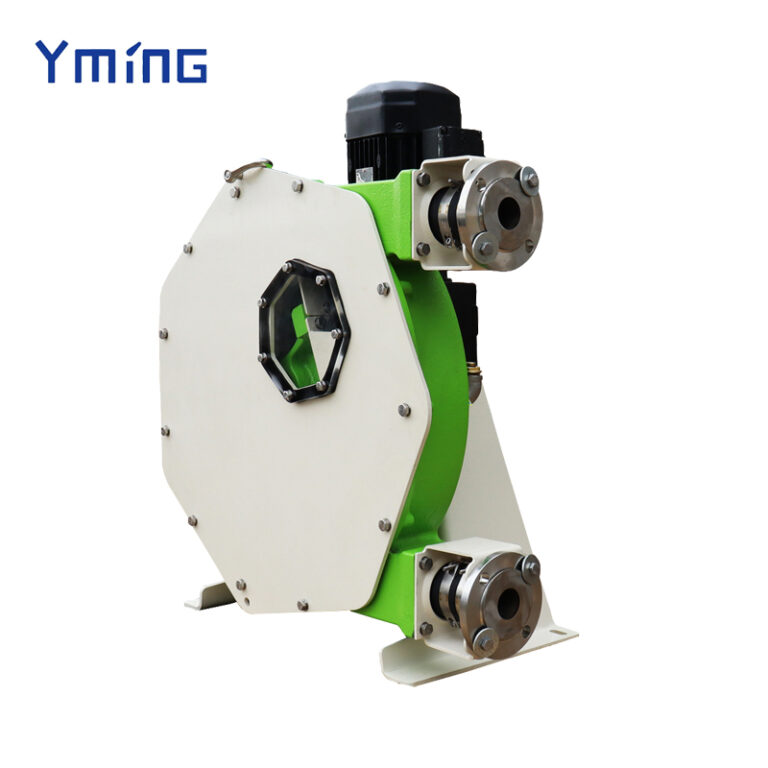
High-viscosity fluid handling: Capable of effectively transporting fluids with a wide range of viscosities, such as pastes, sludges, slurries, flocculants, etc., which are highly viscous and have high solid content.
No pollution: The fluid only comes into contact with the inner wall of the hose. Food-grade optional hygiene standards (such as FDA certification) hose materials are available for the food, pharmaceutical, and beverage industries, making it an ideal choice.
Self-priming capability: Can start without priming, and the self-priming usually reaches up to 9 meters vertically.
Good shearability: The fluid is pushed in a relatively smooth manner within the hose pump, and the shear force is small, making it suitable for fluids containing fragile fixed particles and more sensitive particles, avoiding the disruption of physical form.
Good metering and regulation: Flow rate and speed are in a linear relationship. Adjusting the speed can precisely control the flow rate (using a frequency converter to adjust the speed).
Simple maintenance and low cost: The only wear part is the hose. Replacing the hose is convenient, and the maintenance downtime is extremely short.

1.The working principle of the hose pump is based on the alternating expansion and contraction of the elastic hose to transport impurities, similar to the functions of the human throat and esophagus.
2. The smooth and sturdy inner tube is installed inside the pump body. The two rollers on the rotor rotate and squeeze, causing the medium to be transported in one direction.
3. When the hose is compressed, it undergoes deformation, creating a large vacuum pressure inside the hose, which then draws the medium into the pump.
4. The pumped medium has no direct contact with the pump components. Instead, it is pumped through a sealed and highly reliable flexible hose.
5. This pumping method is highly suitable for precise metering applications, and the pressure rating can reach up to 16 bar.
6. The high-pressure-resistant hose is composed of an inner layer, an outer layer and a middle fiber reinforcement layer. It can withstand higher working pressure and generate higher suction force.


How to use the performance curve
1.Determine the required flow rate (relative to rpm)
2. Determine the outlet pressure
3. Required net power of the motor
4. Product temperature
5. Calculate the outlet pressure
6. Recommended maximum rotational speed of the pump
Note:
The continuous operating area shrinks as the product temperature rises. If the product temperature exceeds 40℃, the continuous operation area will be reduced to the corresponding purple temperature line.